Downshifting
Actively reducing arousal so the system can return toward baseline
What downshifting actually is
Downshifting is the intentional reduction of nervous system activation once load has accumulated.
It is not collapse.
It is not disengagement from life.
It is a controlled transition out of high-arousal states before damage occurs.
Downshifting is used when:
Pacing was insufficient
Overload signals were missed or unavoidable
Demand temporarily exceeded capacity
It is a corrective move, not a failure.
How it shows up when it’s working
Breathing slows and deepens without forcing
Muscle tension releases in stages
Sensory input becomes less sharp
Thoughts lose urgency
The body regains a sense of internal space
Downshifting feels like descending out of intensity, not shutting off.
What prevents downshifting
Continued stimulation after overload
Staying cognitively engaged while trying to rest
Emotional rumination during recovery
Fear of losing momentum
Restarting activity too early
Downshifting fails when arousal is continuously reintroduced.
Common mistakes
Waiting until collapse to downshift
Using distraction instead of true reduction
Treating downshifting as laziness
Forcing relaxation techniques
Returning to full demand immediately afterward
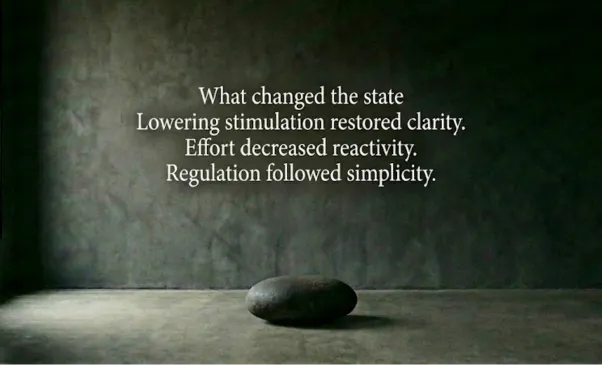
Downshifting works when input is reduced, not replaced.
Why it matters
Without downshifting:
Recovery windows become ineffective
Stabilization erodes
Overload repeats in shorter cycles
Baseline capacity declines
Downshifting is how the system interrupts escalation.
It allows recovery to begin before damage compounds.
If you’re not sure where to go next
If something here helped you settle or understand what’s happening, pause and rest.
If something raised questions, Explore shows work in progress and thinking out loud.
If you want finished work, go to Works.
If things feel unstable or overwhelming, start with Body or a Support Room.
If this loss of authority is showing up as financial pressure or instability, there’s a practical guide for that here.