Stoic morning/evening rituals
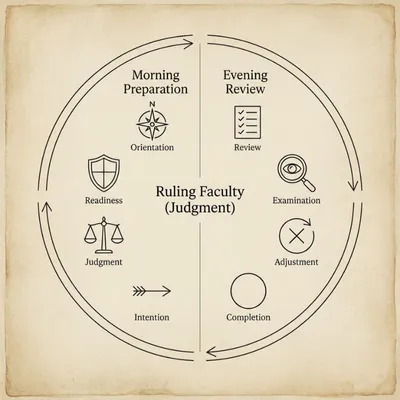
Stoic practice is not about motivation or mood. It is about calibration. Morning and evening rituals serve as bookends that align judgment, action, and reflection.
Morning ritual (preparation)
The Stoics used the morning to prepare the mind for contact with the world.
Core functions:
Establish control over judgment before events begin
Anticipate difficulty without emotional rehearsal
Set intention based on virtue, not outcome
Common elements:
Premeditatio malorum
Briefly anticipate likely challenges. Rudeness. Delay. Discomfort. Loss of control.
Purpose is readiness, not worry.
Dichotomy of control
Identify what is up to you today (judgment, effort, restraint) and what is not.
Virtue priming
Decide how wisdom, justice, courage, and moderation will show up in action.
Intentional framing
“I will act rightly if nothing prevents me.”
The morning ritual is forward-facing. It prevents surprise from turning into reaction.
Evening ritual (review)
The evening is for correction, not self-attack.
Core functions:
Examine conduct without excuses
Reinforce learning through repetition
Clear the mind before rest
Common elements:
Review of actions
What did I do well. What did I do poorly. Where did I act automatically.
Judgment audit
Where did I mistake externals for goods or evils.
Correction
What will I do differently next time.
Release
The day is complete. Nothing more can be done now.
Seneca described this as a private court of law. You are both witness and judge.
Why this matters
Morning prevents drift.
Evening prevents accumulation.
Together they create continuity of character, not intensity.
This is not journaling for expression.
It is maintenance of the ruling faculty.