What people are struggling with
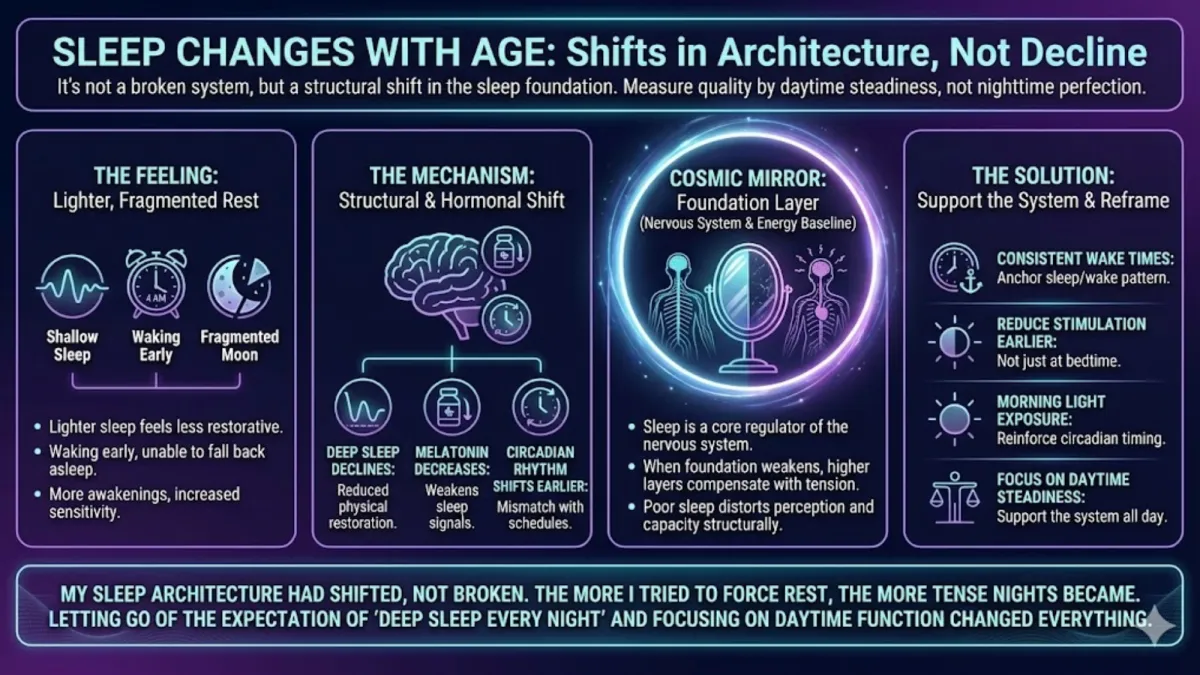
Lighter sleep that no longer feels restorative
Waking up earlier than intended and being unable to fall back asleep
More nighttime awakenings for no clear reason
Feeling tired despite spending enough time in bed
Increased sensitivity to noise, light, temperature, or discomfort
Confusion about whether poor sleep means something is “wrong”
Why this keeps repeating
Deep sleep naturally declines with age, reducing physical restoration
Melatonin production decreases, weakening sleep onset and maintenance signals
Circadian rhythm shifts earlier, creating mismatch with modern schedules
Sleep becomes more fragmented and less efficient
Recovery from stimulation, stress, caffeine, and alcohol takes longer
One poor night now has a larger cumulative effect
The system relies more on routine, but routines are often inconsistent
My personal experience
Sleep problems didn’t mean insomnia, anxiety, or decline
The issue wasn’t falling asleep, it was staying asleep
Pushing through fatigue made sleep worse, not better
I mistook lighter sleep for “bad sleep” and reacted by trying harder
The more I tried to force rest, the more tense nights became
What changed things was understanding that my sleep architecture had shifted, not broken
Where this lives in the Cosmic Mirror
Foundation layer
Sleep is a core regulator of the nervous system and energy baseline
When the foundation weakens, higher layers compensate with tension, mood shifts, or anxiety
Poor sleep distorts perception and capacity before it ever affects meaning or mindset
This is not a Signal or Interpretation issue, it is structural
What actually helped me
Letting go of the expectation of “deep sleep every night”
Anchoring sleep and wake times instead of chasing total hours
Reducing stimulation earlier in the evening, not just at bedtime
Treating nighttime awakenings as normal, not emergencies
Supporting the system during the day so nights didn’t have to do all the recovery
Measuring sleep by daytime steadiness, not nighttime perfection
Things to try
Keep wake time consistent even after poor sleep
Get morning light exposure to reinforce circadian timing
Reduce caffeine earlier than you think you need to
Keep evenings predictable and low-stimulation
Use short, early naps if needed, not late ones
Focus on regular meals and hydration to support nighttime stability
Judge sleep quality by how you function, not how the night felt