Moon phases and lunar cycles
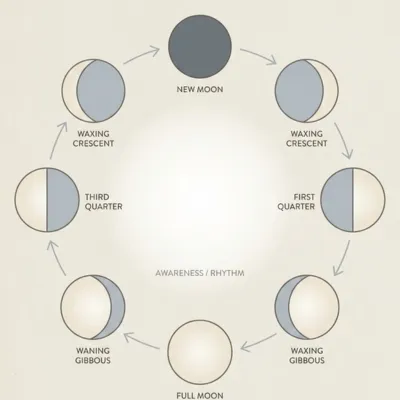
Across cultures, the Moon has been used as a timekeeper for attention, energy, and reflection. Unlike the solar cycle, which emphasizes consistency and outward action, the lunar cycle emphasizes change, rhythm, and return. It reminds you that clarity, effort, and rest move in phases rather than straight lines.
The lunar cycle tracks roughly 29.5 days, moving from darkness to fullness and back again. Each phase has traditionally been associated with a different mode of awareness and engagement with life.
New Moon
Symbolizes emptiness, reset, and inward orientation
Best suited for intention-setting and quiet recalibration
Attention turns inward before action begins
Waxing Crescent
Growth begins but remains fragile
Early effort, planning, and testing without pressure
Energy is rising but not yet stable
First Quarter
Tension between intention and resistance
Requires decisions, discipline, and correction
Momentum is built through friction
Waxing Gibbous
Refinement and adjustment
Effort becomes focused and deliberate
Attention sharpens as fullness approaches
Full Moon
Illumination, visibility, and heightened awareness
What was hidden becomes obvious
Emotional and mental intensity peak
Waning Gibbous
Integration and understanding
Lessons are extracted from experience
Insight replaces urgency
Last Quarter
Release, pruning, and reassessment
Letting go of what no longer fits
Energy turns away from expansion
Waning Crescent
Rest, surrender, and closure
Minimal effort, maximum listening
The cycle completes and prepares to begin again
Across traditions, lunar cycles are not treated as superstition but as natural mirrors of psychological and energetic states.
The Moon does not demand constant productivity. It models responsiveness, timing, and acceptance of change.
Presence within a lunar framework means knowing what phase you are in rather than forcing a phase you are not.