How I Use the Golden Ratio Without Chasing It
I don’t start a piece by trying to “apply the golden ratio.”
I start by paying attention to balance.
The golden ratio shows up later, usually when I step back and check why something feels settled instead of noisy.
What the ratio actually does for me
I don’t treat the golden ratio as a formula. I treat it as a reference.
It helps me answer questions like:
Why does this area feel heavy?
Why does my eye keep getting stuck here?
Why does the piece feel almost right but not finished?
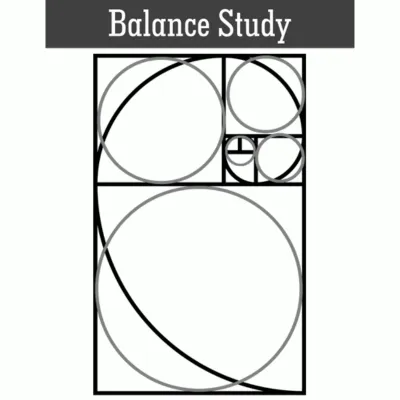
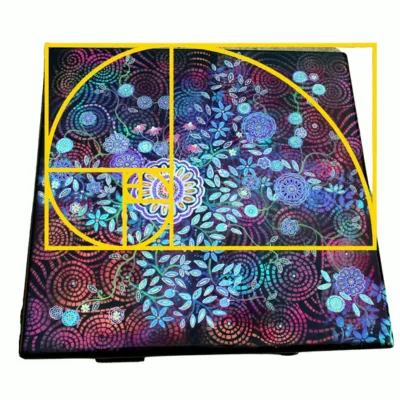
When something feels off, I’ll overlay a spiral or grid and look at where the weight is landing.
Not to force alignment, but to see what the piece is already doing.
Most of the time, the structure is already there. I just need to support it.
Balance before precision
I’m not measuring distances or counting sections.
I’m watching:
Where the eye enters
Where it pauses
Where it exits
If the movement feels natural, the ratio usually shows up on its own.
If it doesn’t, that tells me something else is wrong.
Too many focal points. Competing textures. Color doing too much work.
The ratio doesn’t fix bad decisions. It reveals them.

Nature trained my eye long before theory did
Leaves, shells, branches, growth patterns. That’s where this came from for me, not a textbook.
Nature doesn’t place things perfectly. It places them relationally.
That’s how I use the ratio. As a relationship check. Not a ruler.
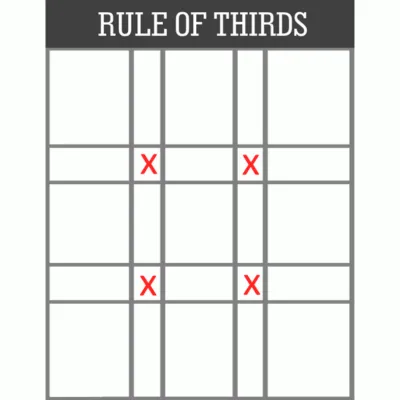
Rule of thirds vs golden ratio
The rule of thirds is useful early on. It’s simple. It gets things out of dead center.
The golden ratio comes in later, when I’m refining flow instead of placement.
Thirds help me block.
The ratio helps me resolve.
How this shows up in my work
You’ll see it most clearly in:
-Table tops
-Collage-heavy surfaces
-Pieces with a dominant form and secondary rhythm
I’ll often let a major element sit slightly off where logic says it should be.
That tension is intentional. The ratio helps me make sure that tension resolves instead of lingers.
The point isn’t math
The point is quiet movement.
If your eye can move through the piece without getting trapped or rushed, the structure is doing its job.
Sometimes the golden ratio is visible.
Sometimes it’s invisible.
Either way, it’s not the goal.
Balance is.