Alan Watts: The Creative Necessity of Death
What We Lose When We Refuse to Face Death
1. Death Is Natural and Necessary
Watts cuts straight through the modern obsession with survival. He questions the unspoken assumption that staying alive at all costs is the highest good. It isn’t.
If individuals lived forever, life would not become richer. It would become crowded, rigid, and stagnant. No room for movement. No room for renewal. No room for anything new.
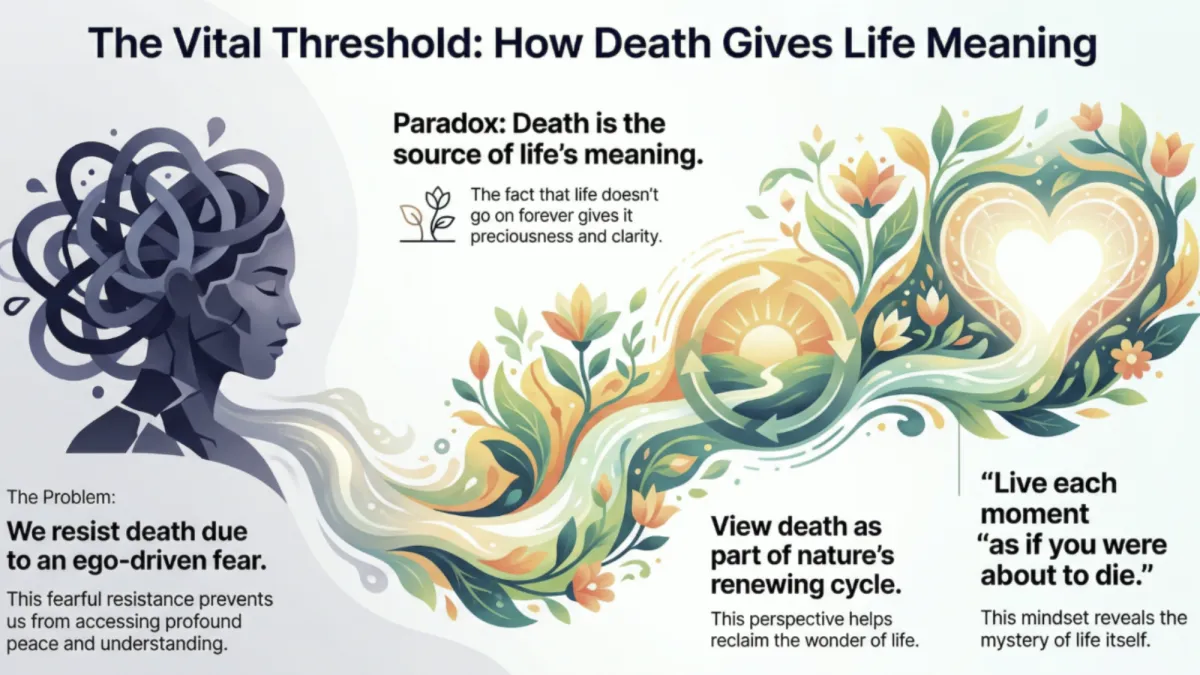
Death is not a failure of life. It is how life clears space. It is honorable because it makes room for others. Just as fallen leaves rot into soil, death feeds what comes next. Without it, growth stops. Renewal stops. Life hardens into repetition.
2. Life Is Renewed Through New Perspectives
Watts points out something uncomfortable. Life stays interesting not because it continues, but because it changes hands.
Each new person arrives with fresh eyes. Children see wonder where adults see routine. They experience the world directly, before it’s flattened into habit, profit, and survival strategy.
Adults lose this because they become obsessed with maintaining themselves. When awareness narrows into fear and control, the magic disappears. At that point, Watts says, we stop playing Nature’s real game, which is awareness knowing itself.
When awareness dries up, the individual exits. Not as punishment. As replacement. Life continues, just not through the same lens.

3. Our Culture Pathologizes Death
Watts calls modern culture sick for one main reason: it treats death as a mistake.
We hide it. We soften the language. We withhold the truth. We turn dying into a managed event rather than a conscious passage.
The result is not compassion. It’s deprivation. People die isolated, sedated, unprepared, and disconnected from the gravity of what’s happening. The moment with the most potential for clarity is robbed of meaning.
By trying to protect people from death, we strip them of one of the deepest human experiences available.
4. Death as a Portal to Profound Insight
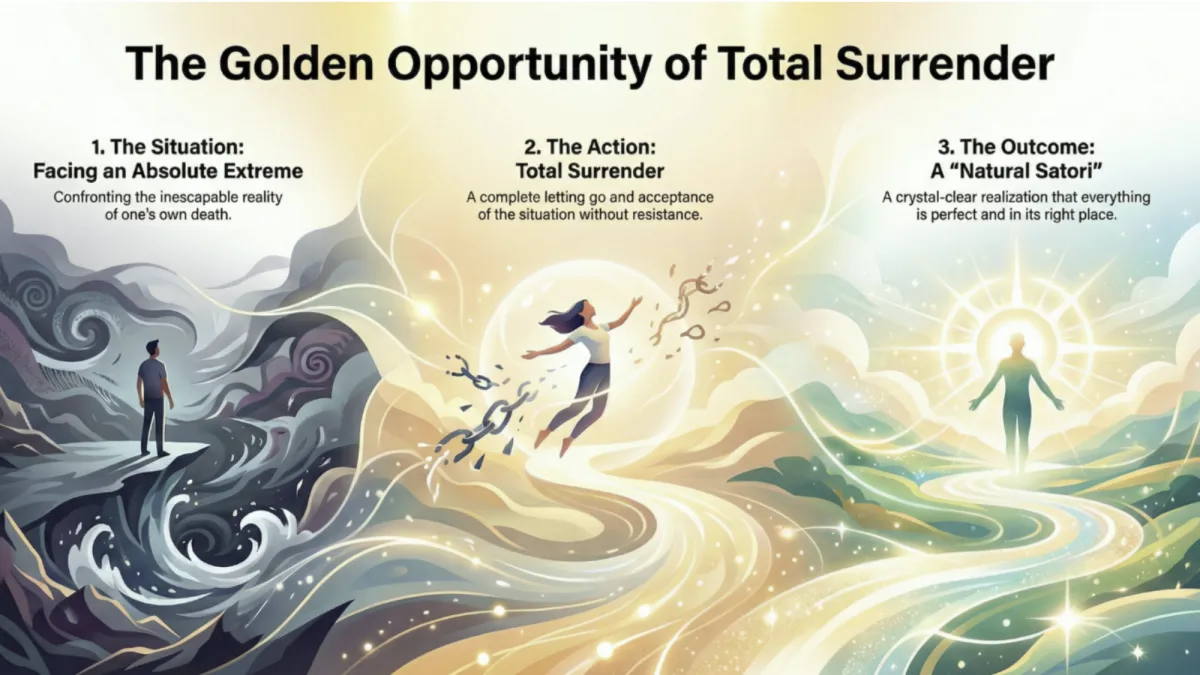
Watts describes death as the ultimate confrontation. There is no negotiation left. No strategy. No escape.
And when resistance finally drops, something unexpected can happen.
Total surrender can produce a sudden, unmistakable clarity. Not belief. Not comfort stories. Direct knowing. Everything exactly where it belongs. Nothing to fix. Nothing missing.
This is what he calls a natural Satori. Not earned through effort, but revealed when effort ends.
Modern systems interrupt this. Institutions rush in. Medicine takes over. Control replaces surrender. The opportunity is lost.

6. The Paradox: Death Gives Life Its Meaning
Watts’ final point is simple and ruthless.
Life is precious because it ends.
If existence were guaranteed, nothing would matter. Urgency disappears. Attention dulls. Meaning dissolves.
Knowing that this moment does not have to exist is what sharpens it. If you lived each moment with the clarity that it could end, you would finally see what life is.
Not as an idea. As an experience.

6. The Paradox: Death Gives Life Its Meaning
Watts’ final point is simple and ruthless.
Life is precious because it ends.
If existence were guaranteed, nothing would matter. Urgency disappears. Attention dulls. Meaning dissolves.
Knowing that this moment does not have to exist is what sharpens it. If you lived each moment with the clarity that it could end, you would finally see what life is.
Not as an idea. As an experience.

Watts isn’t asking us to romanticize death. He’s asking us to stop lying about it.
Death is not the opposite of life. It’s the condition that makes life move, change, and stay awake. When we stop fighting it, something unexpected happens.
Fear loosens. Wonder returns. And life, finally, feels alive again.