Sleep problems / never rested (Foundation)
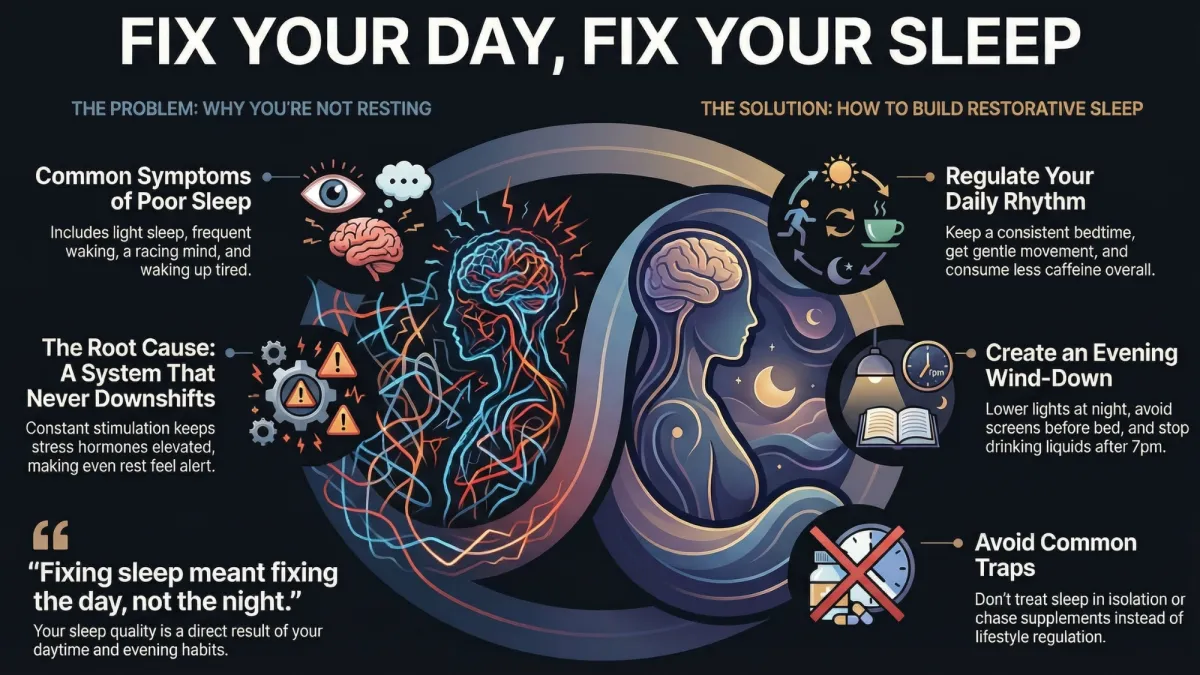
What’s actually happening
Not a lack of hours
Frequent waking
Shallow rest
Mind doesn’t fully shut down
Mornings feel tired despite enough time in bed
Body sleeps
System stays alert
Rest feels vigilant
Sleep happens
Recovery doesn’t
Why this keeps repeating
Nervous system never fully downshifts
Stress hormones stay elevated into the night
Vigilance continues during rest
Sleep reflects daytime regulation
Overstimulated days create activated nights
The system doesn’t cool off automatically
Sleep mirrors the state it enters
My experience
Followed periods of overstimulation
Long work hours
High mental engagement
Too many inputs
Fixing sleep required fixing the day
Activated days produced light sleep
Tiredness alone didn’t deepen rest
Where this lives in the Cosmic Mirror
Foundation layer
Health and body regulation
Instability here forces compensation everywhere else
What actually helped
Earlier wind-down
Lower evening stimulation
Consistent sleep timing
Less overall caffeine
Cutting liquids earlier
Removing partial wake triggers
Treating sleep as an outcome
Not a task
Things to try
Same bedtime daily
Lower lights at night
No late screens
Gentle movement earlier in the day
Discharge energy before evening
Avoid late intense workouts
Stop stacking stimulation near bedtime
Common traps
Treating sleep as separate from life
Chasing hacks or fixes
Relying on supplements alone
Ignoring daytime regulation
Forcing sleep instead of settling the system
Related paths
Burnout
Anxiety
Brain fog
Foundation regulation